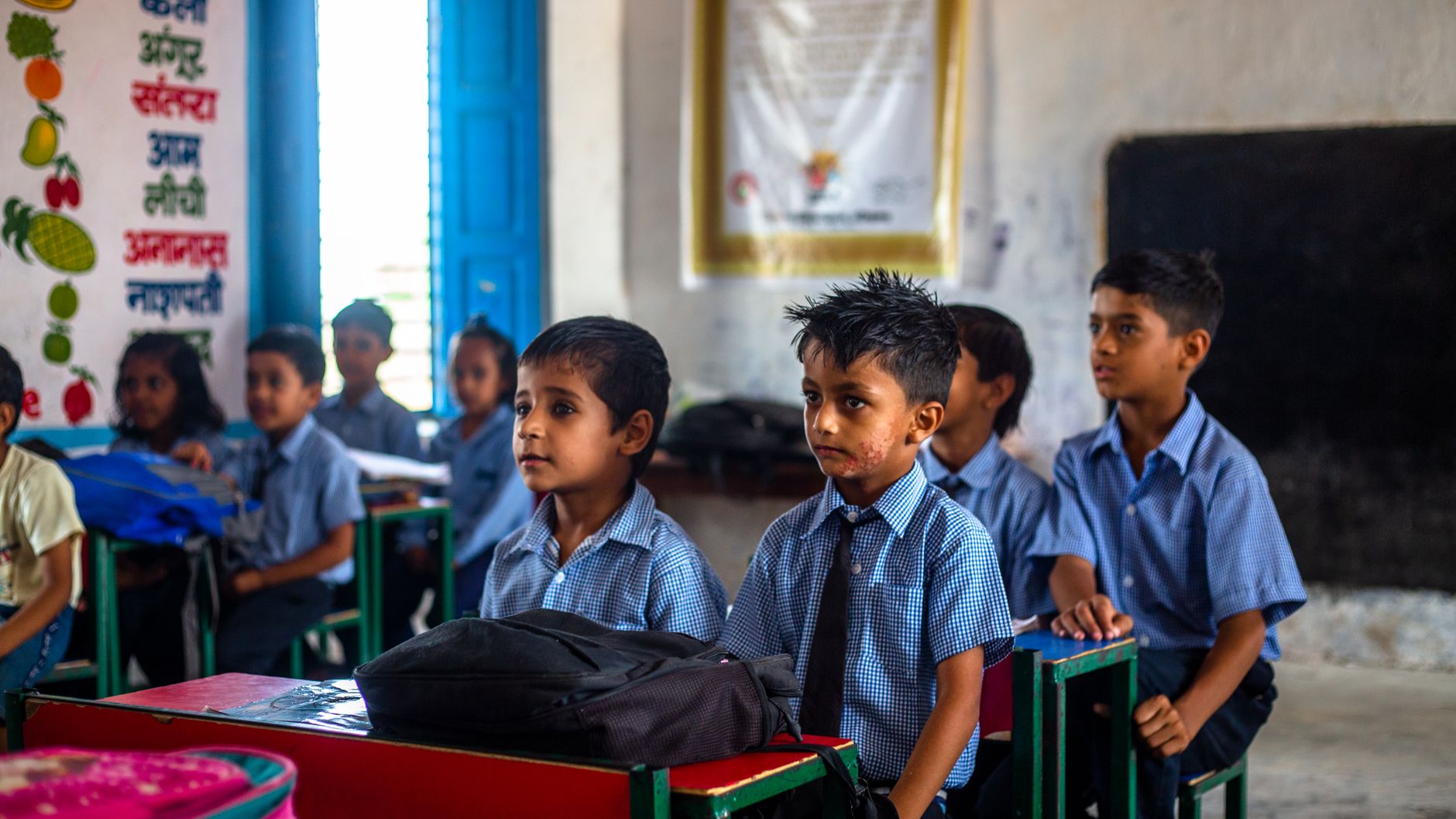
India's education system serves over 250 million students, making it one of the largest in the world. Yet despite its scale, growing voices suggest the current centralised model constrains rather than empowers young learners. The debate around decentralising education has gained momentum as stakeholders question whether a one-size-fits-all approach can truly serve a nation of extraordinary diversity.
The Current Centralised Model
India's education system operates primarily under centralized frameworks, with bodies like the Central Board of Secondary Education and the University Grants Commission setting standards nationwide. The National Education Policy 2020 attempted reforms, but implementation remains largely top-down. This structure means curriculum decisions, examination patterns, and pedagogical approaches are often determined far from the classrooms where they're applied.
The standardisation brings certain advantages—uniform qualification recognition, national mobility for students, and baseline quality standards. However, critics argue these benefits come at significant costs, particularly for a country spanning multiple linguistic, cultural, and economic contexts.
Why Centralisation Creates Challenges
The pressure-cooker environment of competitive examinations like JEE and NEET exemplifies concerns about the current system. Students across vastly different socioeconomic backgrounds compete for limited seats, often requiring expensive coaching that favours urban, affluent families. This creates what some educators call a "preparation industry" rather than genuine learning.
Regional diversity suffers under uniform curricula. A student in Kerala faces the same broad educational framework as one in Rajasthan, despite vastly different local economies, employment landscapes, and cultural contexts. Local history, regional languages beyond the constitutional provisions, and area-specific skills often receive inadequate attention.
The focus on rote memorization over critical thinking remains entrenched. Standardised testing across millions of students naturally gravitates toward questions with clear right-or-wrong answers, leaving little room for creative problem-solving or subjective analysis that might be harder to grade uniformly but more valuable for real-world application.
The Case for Decentralisation
Advocates for educational decentralisation point to several potential benefits. Local control could allow states and districts to tailor curricula to regional employment needs. Coastal areas might emphasise marine studies, agricultural regions could integrate modern farming techniques, and industrial zones might focus on relevant technical skills.
Greater autonomy for educational institutions could foster innovation. When schools and colleges have flexibility in curriculum design and teaching methods, they can experiment with approaches that suit their specific student populations. International examples from countries like Finland show that trust in teachers and local flexibility often correlates with better outcomes.
Regional language instruction could receive stronger emphasis. While the three-language formula exists, practical implementation varies. Genuine decentralisation might allow states to develop robust educational content in local languages, potentially improving comprehension and reducing dropout rates among students who struggle with instruction in unfamiliar languages.
Potential Concerns and Safeguards
Critics of decentralisation raise valid concerns. Quality disparities between states could widen if wealthier states invest more in education while others lag. A student's educational opportunity shouldn't depend entirely on their state of birth.
Maintaining minimum standards becomes crucial. Some form of national framework would likely remain necessary to ensure basic competencies in mathematics, sciences, and languages, enabling student mobility and preventing a race to the bottom in educational quality.
Political interference could increase at local levels. While centralisation has its bureaucratic issues, decentralisation without proper safeguards might expose educational institutions to increased local political pressures or ideological manipulation.
Finding the Middle Path
The solution likely lies between complete centralisation and total autonomy. A framework that sets broad national learning outcomes while granting significant freedom in achieving them could balance uniformity with flexibility. States could determine teaching methods, incorporate regional content, and align education with local development needs while ensuring students meet baseline competencies.
Teacher training and empowerment must accompany any structural changes. Even the best-designed decentralised system will fail without skilled, motivated educators who can exercise professional judgment. Investment in teacher education and ongoing professional development becomes even more critical under local control.
Assessment methods could diversify beyond standardised testing. A decentralised approach might enable schools to use portfolios, project-based evaluations, and continuous assessment alongside standardised tests, providing a more holistic view of student capabilities.
The Path Forward
Reforming an education system serving hundreds of millions requires careful planning and stakeholder consensus. Rushed decentralisation without adequate preparation could create chaos. Pilot programs in willing states, coupled with rigorous evaluation, might offer evidence-based pathways forward.
The fundamental question remains whether India's youth would benefit from educational approaches more responsive to local needs and individual potential, or whether national standards better serve equity and mobility. As the debate continues, the focus must remain on what genuinely serves students rather than administrative convenience or political considerations.