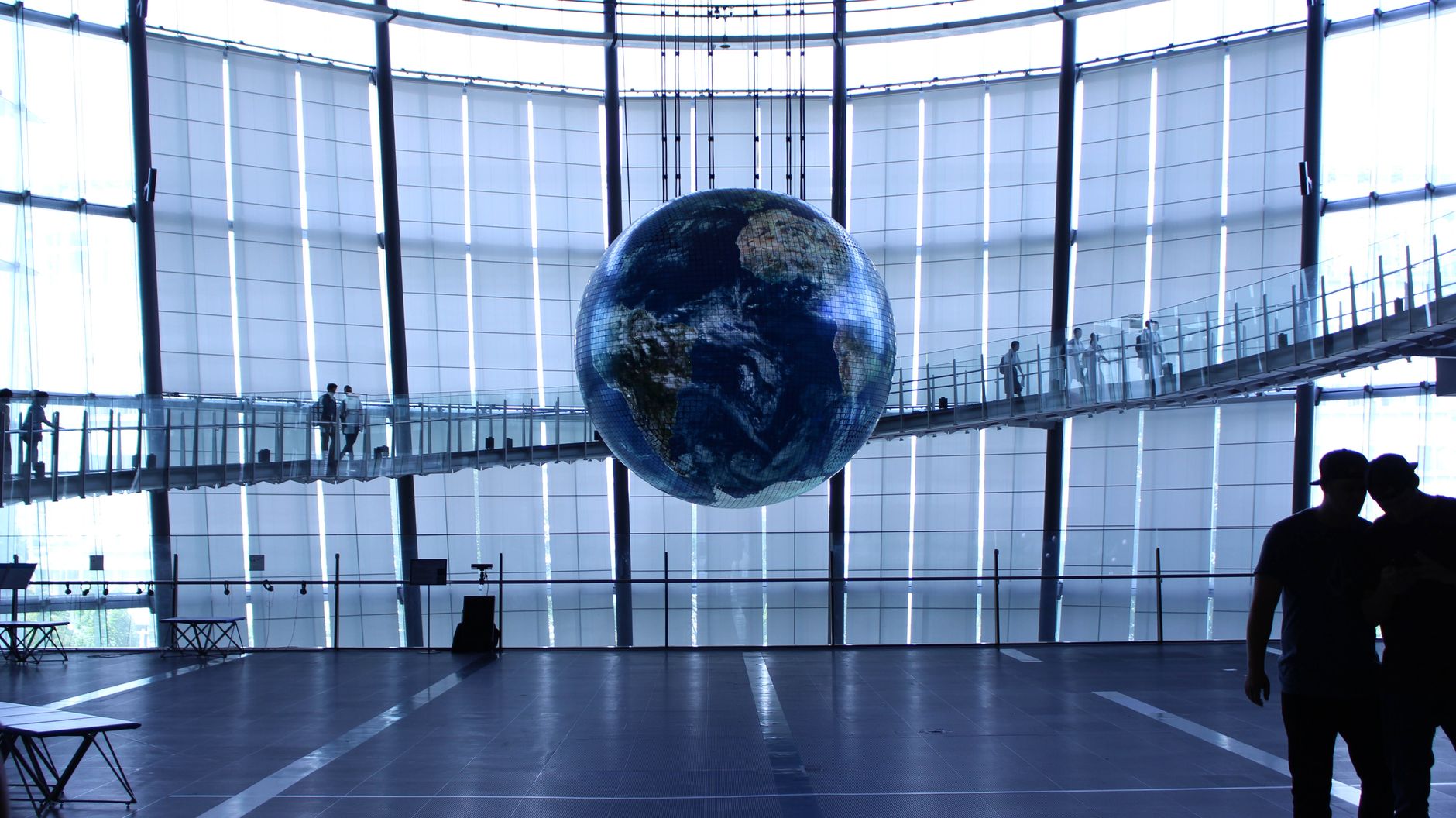
India's rich tradition of astronomical observation and mathematical innovation is finding new expression in Bhopal, where a cutting-edge space exploration gallery demonstrates the continuum between ancient knowledge systems and modern space technology. This unique exhibition space represents a growing trend in Indian museums and educational institutions to highlight indigenous contributions to scientific thought while celebrating contemporary achievements.
Ancient Indian Contributions to Astronomy
India's astronomical heritage spans thousands of years, with sophisticated understanding of celestial mechanics documented in ancient texts. Aryabhata, the 5th-century mathematician and astronomer, calculated the Earth's circumference with remarkable accuracy and proposed that the Earth rotates on its axis. His work predated similar European discoveries by centuries.
The concept of zero, fundamental to all modern calculations including space trajectories, originated in India. Ancient observatories like Jantar Mantar demonstrate the precision with which Indian astronomers tracked planetary movements. These historical achievements form the foundation for understanding how ancient wisdom connects to contemporary space exploration.
Bridging Millennia of Knowledge
The Bhopal gallery's innovative approach lies in demonstrating conceptual continuities rather than simply displaying artifacts side by side. Ancient astronomical instruments are contextualized alongside their modern equivalents, showing how fundamental principles remain constant even as technology evolves.
Visitors can explore how ancient Indian mathematicians' calculations of planetary orbits relate to contemporary satellite trajectory planning. The exhibition illustrates how Vedic geometry concepts find application in spacecraft design and how traditional timekeeping methods based on celestial observation connect to atomic clocks used in space navigation.
Interactive Learning Experiences
Modern museums increasingly emphasize experiential learning, and this gallery reportedly incorporates interactive elements that engage visitors of all ages. Digital displays might allow visitors to compare ancient star charts with modern sky-mapping applications, while hands-on exhibits could demonstrate principles of gravity and motion understood by ancient scholars and applied by today's space engineers.
Such installations serve multiple educational purposes. They make space science accessible to general audiences, inspire young people toward STEM careers, and foster pride in India's scientific heritage. By presenting ancient and modern knowledge as complementary rather than contradictory, the gallery promotes scientific temperament rooted in cultural context.
India's Contemporary Space Achievements
The gallery provides context for showcasing India's remarkable space program achievements. From the Mars Orbiter Mission (Mangalyaan), which made India the first nation to reach Mars orbit on its maiden attempt, to the Chandrayaan missions exploring the Moon, India has established itself as a major space-faring nation.
Recent successes include the Chandrayaan-3 mission's successful lunar landing and the Aditya-L1 solar observatory. These achievements represent the practical application of both cutting-edge technology and fundamental principles understood by ancient Indian astronomers who meticulously studied the Sun, Moon, and planets.
Educational Impact and Cultural Pride
Exhibitions that blend heritage with modern science serve crucial educational and cultural functions. They demonstrate to students that scientific inquiry is not foreign to Indian culture but deeply embedded in its intellectual traditions. This can help counter the false dichotomy sometimes drawn between traditional knowledge and modern science.
For international visitors, such galleries provide insight into India's multifaceted contributions to global scientific progress. They challenge Eurocentric narratives of scientific history by highlighting parallel developments and independent discoveries made in different cultural contexts.
The Future of Science Museums in India
This Bhopal initiative reflects a broader movement in Indian science communication. Museums, planetariums, and science centers across the country are reimagining how they present scientific knowledge, incorporating regional languages, local contexts, and indigenous knowledge systems.
The approach recognizes that effective science education must be culturally relevant and historically grounded. By showing visitors where they've come from scientifically, these institutions better prepare them for where they're going. Young Indians learning about Aryabhata's calculations alongside ISRO's achievements see themselves as inheritors of a continuous scientific tradition.
As India continues expanding its space program with ambitious plans for space stations, Venus missions, and human spaceflight, galleries like this one serve as important public engagement tools. They build the broad-based scientific literacy and enthusiasm essential for sustaining long-term investment in space exploration and STEM education.
The blending of ancient concepts with modern technology at this Bhopal gallery represents more than nostalgic celebration—it's a sophisticated pedagogical approach that makes space science accessible, culturally resonant, and inspiring for diverse audiences.